

one day the mule died
the death of the mule revealed itself to be a much greater problem than it at first seemed

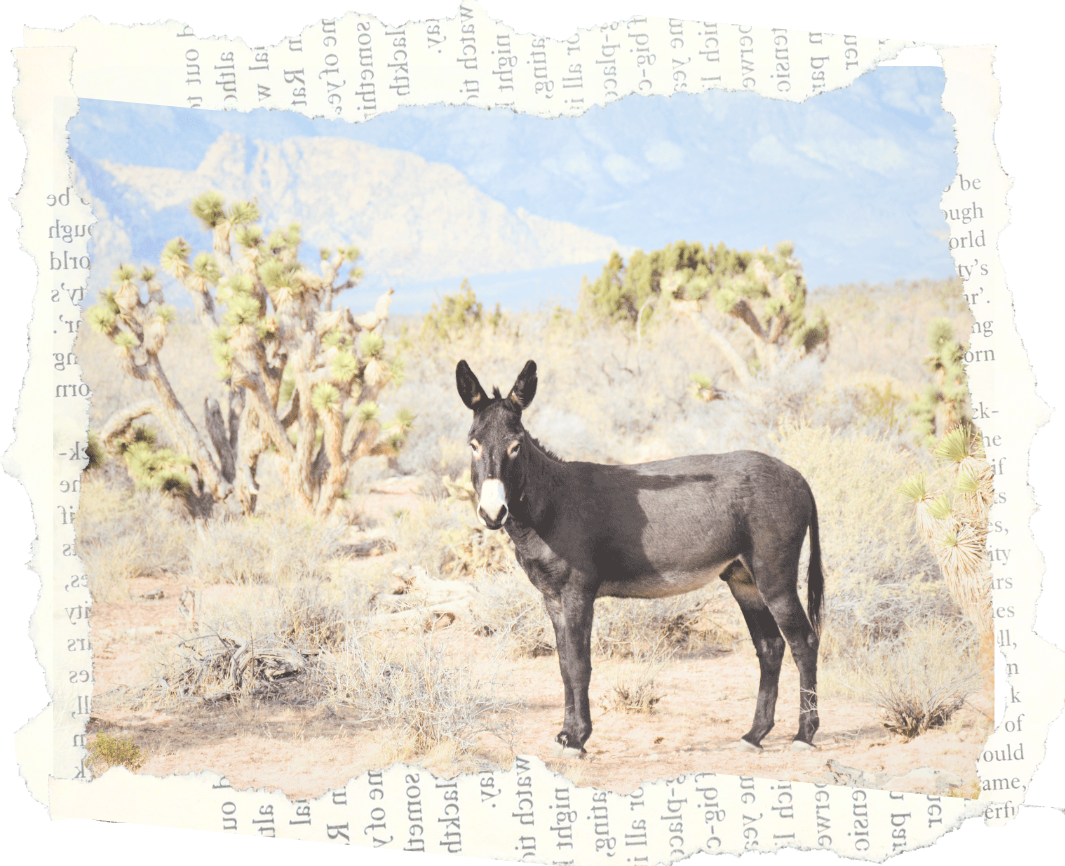
Don Abrahán Sisneros and his caravan travelled north from Mexico, through land so silent it seemed poised to rise snarling at any moment. They met a few Pueblo once, and with the help of the boy in their caravan, the meeting was friendly. They traded a pair of leather boots for some corn and chiles.
.
One day the mule died. He hadn’t been looking well for weeks. The cook was riding on the mule’s back when his legs folded and had to extract his clubfoot from beneath the body and yell for the rest of the caravan to wait. The mule fluttered a few breaths and his eyes rolled upward to stare wildly at the sky, a blue so blue it seemed obscene, the clouds like castles or buffalo marching across. Then he died.
Don Abrahán Sisneros wanted to set up camp near the red butte. They all agreed it was majestic, but the soldiers estimated it was at least three leagues away, and the cook said he couldn’t go anywhere without a mule to ride because of his club foot, and there wasn’t enough room on the other horses to carry him and all the cooking supplies.
Indeed, they had brought the absolute minimum of supplies, people, and animals. The death of the mule suddenly revealed itself to be a much greater problem than it at first seemed.
The cook suddenly thought of a solution and feared it had also occurred to the other men. The air became prickly, electric. It would be too cruel to let him starve and bake to death on the scalding ground. The cook imagined one of the soldiers stepping forward and pointing his rifle. Or perhaps Don Abrahán Sisneros would solemnly call the cook forward and cut his throat with a long knife and the blood would fall onto the thirsty scraggled sagebrush. The cook imagined his life ending unforeseen on this cracked orange earth, all because of the death of a mule. He could hear the buzzards flapping around the mule’s body, rattling at one another.
No me maten, the cook whispered. There was silence among the men, which confirmed to the cook that they had all at least considered the possibility.
Si él muere, no sería nadie a cocinar, said one of the soldiers, and it was unclear whether he meant this as a reassurance to the cook or as a question to the others. If he dies, there won’t be anyone to cook.
Yo puedo cocinar, said the scribe helpfully, sheepishly, avoiding looking at the cook.
The cook was whispering prayers toward the parched earth, beginning to retreat from the circle of men and the mocking blue sky into his memory, back to his childhood home in Oaxaca—standing on a stool next to his mother at the stove, the smell of eggs cooking, her voice singing, his baby brother laughing, a thunderstorm, a chicken who got into the house and his mother shooing it out, the sharp buzz of chiles. Two tears rolled slowly down his face, dampening his mustache.
One of the soldiers shook his head at the scribe.
No puedes cocinar, baboso, tus huevos rancheros son como una mierda con sal. The other two soldiers laughed and their laughs were devoured instantly by the hot air. Silence returned. The scribe shrugged.
The cook looked from the faces of the soldiers to the scribe to the sour countenance of the don’s cousin Imanol Ibaiguren, who was picking his teeth with a twig. The cook realized that the only reason Imanol was standing in this circle of lesser men was because he thought there was going to be a death to watch.
Bastard, thought the cook.
The cook’s stomach grumbled. He said a prayer for his mother, his sweet mother with her long white braid.
Carne asada, he said quietly to himself. It was his mother’s favorite dish. He imagined the beef sizzling under her watchful eyes and the kitchen filling with warm meaty smells.
Tamales, he said, a little louder, remembering her lovingly wrapping them in corn husks. The other men were silent. Imanol Ibaiguren stopped picking his teeth.
Pollo encacahuatado, said the cook, the words propelling him. Rosca de miel. Carne adovada, his words becoming louder and stronger, the foods almost tangible on the ground in the center of their circle, as if conjured, recipes the cook couldn’t dream of making on this expedition, exquisite dishes. Chile en nogada. Platanos machos. Ceviche de camarones, he glanced at the faces of the men in the circle as he spoke. All of their eyes were fixed greedily at the center of the circle, watching the phantom dishes materialize and disappear over the cracked orange earth.
.
Don Abrahán Sisneros, who had been staring at the red butte the entire time and perhaps had been listening and perhaps not, called out suddenly to the circle of men, Quedamos aquí esta noche. We’ll stay here tonight.
The soldiers nodded and went to their horses to unload. Imanol Ibaiguren took off his hat and ran his fingers through his black hair. A few droplets of sweat fell to the earth and were swallowed. The Pueblo boy walked a few paces apart, urinated into his hand, and drank it. He always did this unless they were near a stream, in which case he drank the water from the stream.
The cook did not fall to his knees to thank the men or god. He murmured, Gracias, madre, wiped away the bit of snot that had gathered in his mustache, and began gathering supplies from his pack to make beans for dinner. Thank you, mother.
.
(from the novel Cricket’s Almanac, which chronicles the town of Skelling, NM through its geological inception through the present day.)
The mule is more valuable than people know. It must be something horrible to have everyone around staring at you and picturing your own ending. I think he was right to pray. Maybe it helped and maybe it didn't, but it was a good thing. Awesome story, Samara.
Ahhh love this. Can't blame that scribe for trying to secure his place I guess.
Wonderful vignette.